The Hidden Cost of an Empty Home: How to Protect Your Family’s Equity Before You Sell
There is a distinct, heavy quiet that settles into a house when it sits empty for too long.
As a real estate agent, I walk through countless homes along the I-20 corridor. Often, I step into a house that clearly has beautiful bones, incredible character, and a lifetime of memories woven into its walls—only to see that it is slowly, quietly deteriorating from the inside out simply because no one is living there anymore.
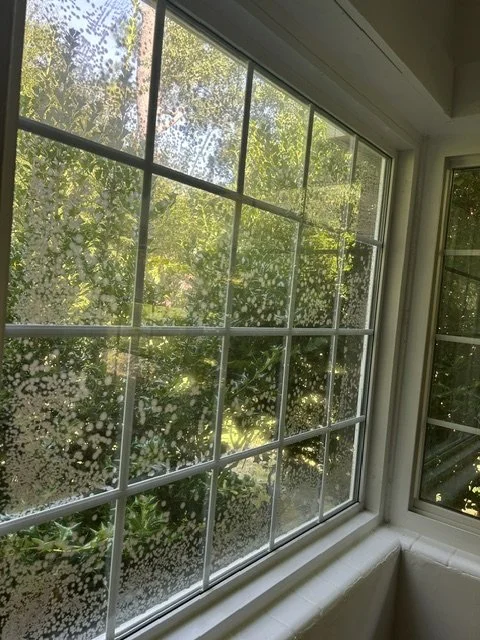
I took a photo recently at a showing that perfectly captures this heartbreaking reality. Look closely at the windowpane in the image above. That isn’t dirt on the outside of the glass, and it isn't a smudge that can be wiped away with some Windex. That is a failed thermal seal. Moisture and humidity have become permanently trapped between the double panes of glass.
How does this happen? It is the direct result of a home being closed up and left to fend for itself in the Alabama heat.
Understanding the "Why" Behind the Damage
I completely understand how this happens. The reasons a home sits vacant are rarely happy or stress-free. Most of the time, it’s because a family is navigating the overwhelming process of probate after the passing of a loved one. Other times, it’s due to a sudden job relocation, declining health requiring a move to an assisted living facility, or a complicated divorce.
When life throws you a massive curveball, managing an empty house is the last thing you want to deal with. The most natural, logical instinct for most families is to go to the breaker box, shut everything down, and cancel the utilities to save a few hundred dollars a month while the estate is sorted out.
But here is the hard truth that many people don't grasp: Homes are engineered to breathe.
When you turn off the HVAC in our climate, a house stops breathing. It becomes a stagnant, sealed greenhouse. The indoor temperature wildly fluctuates, baking in the summer sun and freezing in the winter. These extreme temperature swings cause the materials in the house to expand and contract violently. That is exactly what causes expensive window seals to pop and fail.
Beyond the windows, shutting down a house allows Alabama’s famous humidity to settle in. Hardwood floors begin to cup, doorframes swell until they won't close, paint starts to peel, and hidden mold quietly takes root in the drywall. Saving $75 a month on the power bill can easily result in $15,000 worth of necessary repairs and lost property value when it finally comes time to sell.
The Vacant Home Preservation Checklist
Protecting a home’s worth isn't just about staging it with nice furniture or taking professional photos; it starts with preserving its physical integrity during the hardest transition periods.
If you or your family are holding onto a vacant property before placing it on the market, here are the crucial, often-overlooked steps to keep the home healthy:
1. Treat Climate Control as an Investment, Not an Expense
Never turn the air conditioning or heating completely off. In the summer, set the thermostat between 74°F and 76°F. This isn't about keeping the house perfectly comfortable for guests; it is about allowing the system to pull the destructive humidity out of the air. Set the fan to "AUTO" so the air cycles regularly.
2. Deploy Passive Dehumidifiers
Even with the AC running, stagnant air can pool in closed-off areas. Buy a multi-pack of moisture absorbers (like DampRid buckets) and place them strategically around the house. Put them in the basement, inside walk-in closets, and in windowless bathrooms. You will be shocked by how much water they pull out of the air in just a few weeks.
3. Open Up the Interior
Air needs to circulate freely to prevent stale, damp pockets from forming. Leave all bedroom and bathroom doors wide open. Open up the closet doors. Take it a step further and prop open the cabinet doors under the kitchen and bathroom sinks to allow the plumbing to stay dry and ventilated.
4. Keep the Plumbing Alive
When a house sits unused, the water inside the plumbing P-traps (the U-shaped pipes under your drains) evaporates. Once that water barrier is gone, hazardous and foul-smelling sewer gases can drift up into the house. Furthermore, rubber gaskets and seals inside toilets and faucets can dry rot without use. Make sure someone visits the house at least once a month to run water in every sink and shower for a few minutes and flush every toilet.
5. Schedule Regular "Air Outs"
A house needs a pulse. It needs someone to walk through it, check for unseen roof leaks after a heavy thunderstorm, and physically open the front and back doors to let a cross-breeze of fresh air flush out the stagnant energy.
You Don't Have to Do This Alone
Navigating an estate or an empty property is an incredibly heavy burden to carry, both emotionally and logistically. You should not have to worry about popping window seals and dry P-traps while you are grieving or trying to manage a major life transition.
This is where having a proactive, deeply invested real estate agent makes all the difference. When I list a vacant home, I don't just put a sign in the yard and wait for the phone to ring. I become the caretaker of that equity. I am the one going over to check the thermostat, running the faucets, airing out the living room, and making sure the home retains every single dollar of its value until we get it to the closing table.
If you are managing an estate or preparing a vacant home for the market anywhere along the I-20 corridor—from Oxford to Pell City—let’s talk. Let's put a strategy in place before small maintenance issues turn into massive price reductions.
Angelena Cofield, REALTOR®
Text today “HOME” 256-473-5336 to start your no pressure conversation.
Kelly Right Real Estate of Alabama